Bengaluru to the sea: six days down the Karnataka coast
A six-day route from Bengaluru through the Western Ghats to Mangaluru, Udupi, Murudeshwar and Gokarna, with real fares, ferry timings and what to eat at every stop.
Some links in this story are affiliate links: if you book through them, the blog earns a small commission at no extra cost to you. Picks are chosen on reviews and value, never on commission.
In this story
Somewhere past Sakleshpur, the train slows to a crawl and goes dark. It comes out of the tunnel onto a bridge over a gorge so deep that the whole vistadome coach goes quiet at once. For the next two hours it carries on like that: tunnel, bridge, waterfall, tunnel. Then the hills give way to areca palms and red-tiled roofs, and the air through the door smells of salt and frying fish. Bengaluru left at seven in the morning. By late afternoon you’re in Mangaluru.
This trip is for anyone in Bengaluru who keeps meaning to “do the coast” and ends up in Goa again. It starts with temple towns, ferries to basalt islands, buffalo-race country and the best fish thalis in the south, and finishes on Gokarna’s cliff-path beaches. You can do the whole stretch on trains and buses.
At a glance
| Best time to go | October to March; ferries and dives stop June to September |
| Days you need | 6 days, 5 nights |
| Getting there | Train via the Sakleshpur ghats, overnight bus, or fly to Mangaluru |
| Daily budget | ₹2,800 – ₹7,800 (about $33 – $93) |
| Language | Kannada, Tulu, Konkani; English in towns |
| Currency | Indian Rupee (₹); UPI almost everywhere |
| Good for | Food, beaches, temples, slow travel, first-time divers |
Why go
Goa’s beaches are busier, but none of them come with this much going on behind them. Coastal Karnataka runs about 300 km from Mangaluru to Karwar. Rivers cut the strip every few kilometres, the Western Ghats sit close behind it, and it has kept a culture of its own: Tulu-speaking towns, all-night Yakshagana theatre, buffalo races in flooded paddy fields and spirit-worship rituals that most of India only met through the film Kantara.
The variety is the real draw. In one morning you can eat neer dosa with chicken curry in a Mangaluru lunch home, then stand on rocks that split from Madagascar about 88 million years ago. In the evening you can watch the sun drop behind a 37-metre Shiva statue. The coast also has the cheapest scuba in India, two Blue Flag beaches, and a highway that runs on a strip of sand between the sea and a river. All of it sits an overnight journey from Bengaluru.
Getting there
By train (the best way in): The Gomateshwara Express (16575) and the weekly 16539 leave Yesvantpur around 07:00 and reach Mangaluru Junction in the late afternoon. Both carry vistadome coaches with glass roofs, worth booking on IRCTC for the Sakleshpur–Subrahmanya Road ghat section of about 55 km, which has dozens of tunnels and bridges. A Bengaluru–Mangaluru Vande Bharat has finished its ghat trials and was promised “within weeks” in November 2026, so check whether it’s running when you book. For the return, the overnight Panchaganga Express (16596) leaves Gokarna Road around 18:30 and reaches KSR Bengaluru around 07:15. It often runs an hour late.
By bus: KSRTC’s Airavat Club Class and sleeper buses leave Bengaluru every night for Mangaluru (7–9 hours via the Shiradi Ghat on NH75) and Gokarna (about 9 hours via Shivamogga and Kumta). Expect ₹800–1,400 depending on class; redBus lists KSRTC and private operators side by side. In the monsoon the Shiradi Ghat sometimes closes for landslides, and buses take the longer Charmadi or Sampaje routes.
By air: Mangaluru International Airport (IXE) at Bajpe is an hour’s flight from Bengaluru and about 14 km from the city. Fares run ₹3,000–6,000 if booked early, and MakeMyTrip’s route page shows the day’s cheapest flights. Coming from the north end, Goa’s Mopa and Dabolim airports are 2–3 hours by road from Gokarna.
Getting around
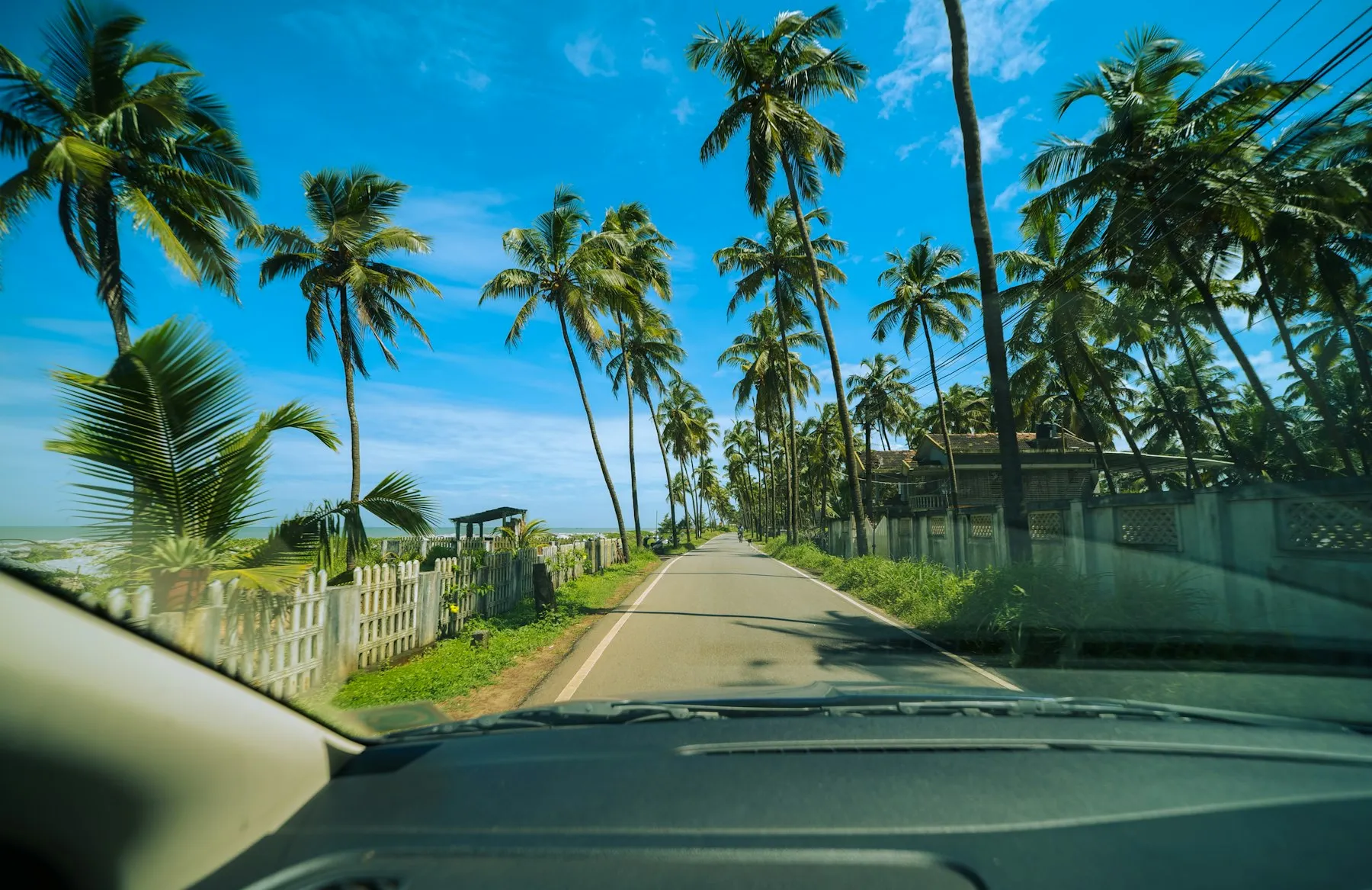 Coconut palms line most roads near the coast. Photo: Pradeep Gopal on Unsplash
The coast is simple to travel because NH66 and the Konkan Railway run side by side for its whole length.
- Buses: Private and KSRTC buses along NH66 run every few minutes between Mangaluru, Udupi and Kundapura, and less often further north. A Mangaluru–Udupi ride (about 60 km) costs ₹70–100. Conductors call out the stops, so just ask.
- Konkan Railway locals: Slow passenger and MEMU trains link Mangaluru, Udupi, Kundapura, Murdeshwar and Gokarna Road for well under ₹100. They’re the calmest way to cover a long stretch, but check times on the NTES app because there are only a few a day.
- Autos and cabs: Uber and Ola work in Mangaluru and Manipal. Elsewhere, agree the auto fare before you get in. A car with a driver for the Udupi–Murudeshwar–Gokarna stretch costs ₹3,000–4,000 a day and is worth it if you’re three or four people.
- Scooters: Gokarna and Malpe rent them for ₹400–500 a day. Carry your licence: police checks on NH66 are common.
Where to stay
- Mangaluru (Hampankatta, Bejai, Kadri): central for lunch homes, the Old Port and the train station. Goldfinch Hotel is the reliable mid-range pick (8.2 from 1,700 guest reviews, around ₹6,500), and Vivanta Mangalore, the old Taj Manjarun on Old Port Road, is the city’s best splurge (8.4 from 900+ reviews, around ₹18,000).
- Udupi–Malpe: stay in Udupi town to be near the Krishna Matha and the restaurants, or at Malpe for the beach and the St Mary’s ferry. In town, Samanvay Boutique Hotel has the best reviews of the hotels (9.1 from 1,300+, around ₹6,000), and Atithi Homestay is a family-run favourite at about ₹2,000 (9.1 from 230+). At Malpe, Villa Malpe puts you close to the ferry (9.1, around ₹7,500).
- Murudeshwar: a short strip of lodges and one big hotel right below the temple. That’s RNS Residency Sea View (8.1 from 600 reviews, around ₹6,000); ask for a sea-facing room. Fine for one night before a dive.
- Gokarna: the town has cheap guesthouses near the temple (from ₹800), and Kudle Beach has cafés with rooms and shacks (₹1,200–3,500). The two best-reviewed small stays are ArtKarna (9.4 from 260+ reviews, around ₹2,900) and Areca Nest (9.2, around ₹2,500); Revibe Beach Hostel is the dorm pick (9.1 from 400). For a splurge, SwaSwara, CGH Earth’s yoga retreat on the headland above Om Beach, runs ₹40,000 and up.
Ratings are guest scores on the booking site each link goes to, and prices are typical December weeknight rates for two, both checked in November 2026.
Top things to do
Ride the ghat section in a vistadome coach
The Sakleshpur–Subrahmanya Road stretch is the most dramatic railway line in South India: about 55 km through the Western Ghats, past waterfalls that only flow from June to December, with dozens of tunnels and long viaducts. The vistadome coach has glass roofs and wide windows, and its seats turn to face them. Book the right-hand side going down for the best views of the gorge. Vistadome seats cost roughly ₹1,000–1,500 and sell out on weekends, so book on IRCTC as soon as your dates are fixed.
Eat your way through Mangaluru’s lunch homes
Mangaluru’s “lunch homes” are no-frills Bunt and Konkani restaurants that serve fish thalis and ghee roast at lunch only. Go between 12:30 and 2:00 and order what’s on the board: kane (ladyfish) rava fry, bangude (mackerel) pulimunchi, prawn ghee roast. A seafood thali with a fry costs ₹250–450. In the evening, walk over to the St Aloysius Chapel. Its walls and ceiling are covered in paintings by the Italian Jesuit Antonio Moscheni, finished around 1900. Entry is free, and photography inside isn’t allowed. If you’d like someone to connect the dots, this full-day Mangaluru heritage tour covers the chapel, Kadri and Mangaladevi temples and a Mangalore bun stop.
See Udupi’s Krishna through a nine-holed window
The Sri Krishna Matha, founded by the philosopher Madhvacharya in the 13th century, is why Udupi exists as a pilgrim town. Pilgrims see the idol through the Kanakana Kindi, a small window with nine holes. The story goes that Krishna turned to face a low-caste devotee, Kanakadasa, who was refused entry. Entry is free and lunch from the temple kitchen is served to everyone. Come early in the morning to avoid the bus-tour crowds, then walk the lanes around Car Street for brass lamps and temple sweets.
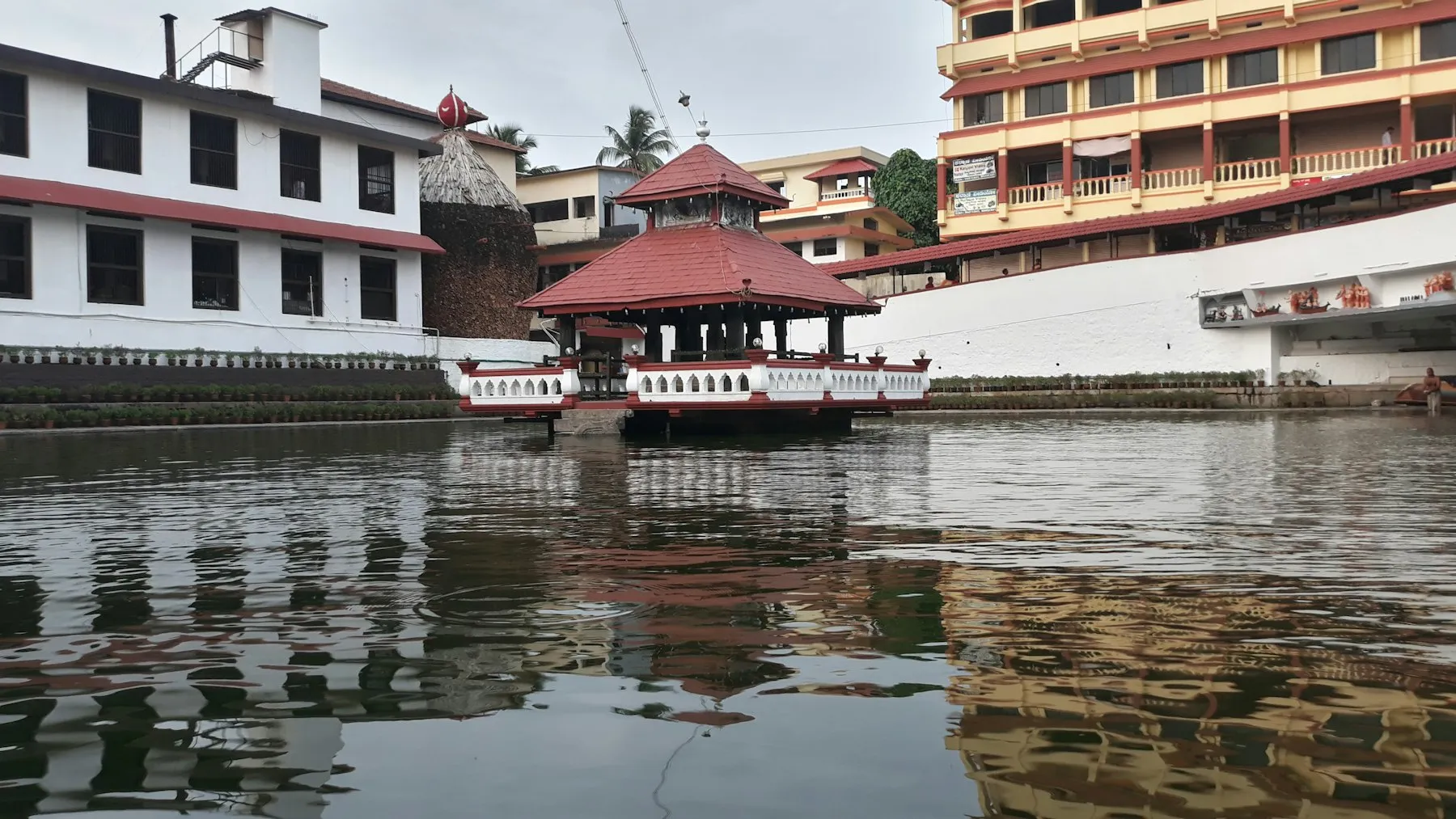 The temple tank in Udupi’s temple quarter. Photo: Sindhudweepa Sharma on Unsplash
Take the ferry to St Mary’s Island
Off Malpe, St Mary’s Island is made of hexagonal basalt columns that formed when Madagascar broke away from India about 88 million years ago. It’s a national geological monument. Boats leave Malpe beach from about 09:00 to 17:00, take around 30 minutes, and cost about ₹350 for a return ticket. Swimming isn’t allowed, there’s no shade or food on the island, and the ferry stops from June to September. Go in the first boat while the rocks are still cool.
Drive the Maravanthe stretch
North of Kundapura, NH66 runs along a strip of sand with the Arabian Sea on the left and the Souparnika River a few metres away on the right. The best views are from the road itself, so stop at the small pull-offs near the Maravanthe beach sign and walk to the waterline. The sea here is rough most of the year, so this is somewhere to watch the waves, not swim. Time it for late afternoon, when fishermen drag nets in, and stop at a roadside stall for tender coconut (₹50–60).
Climb Murudeshwar’s gopuram at sunset
Murudeshwar sits on a small headland, Kanduka Giri, with the sea on three sides. Behind the temple a 37-metre seated Shiva faces the water. In front stands a 20-storey gopuram with a lift to the top. Ride it (₹10–20) about an hour before sunset for the view down the coast and over the fishing harbour. The inner shrine expects modest dress and men may be asked to remove their shirts, so carry a dhoti or a long-sleeved top.
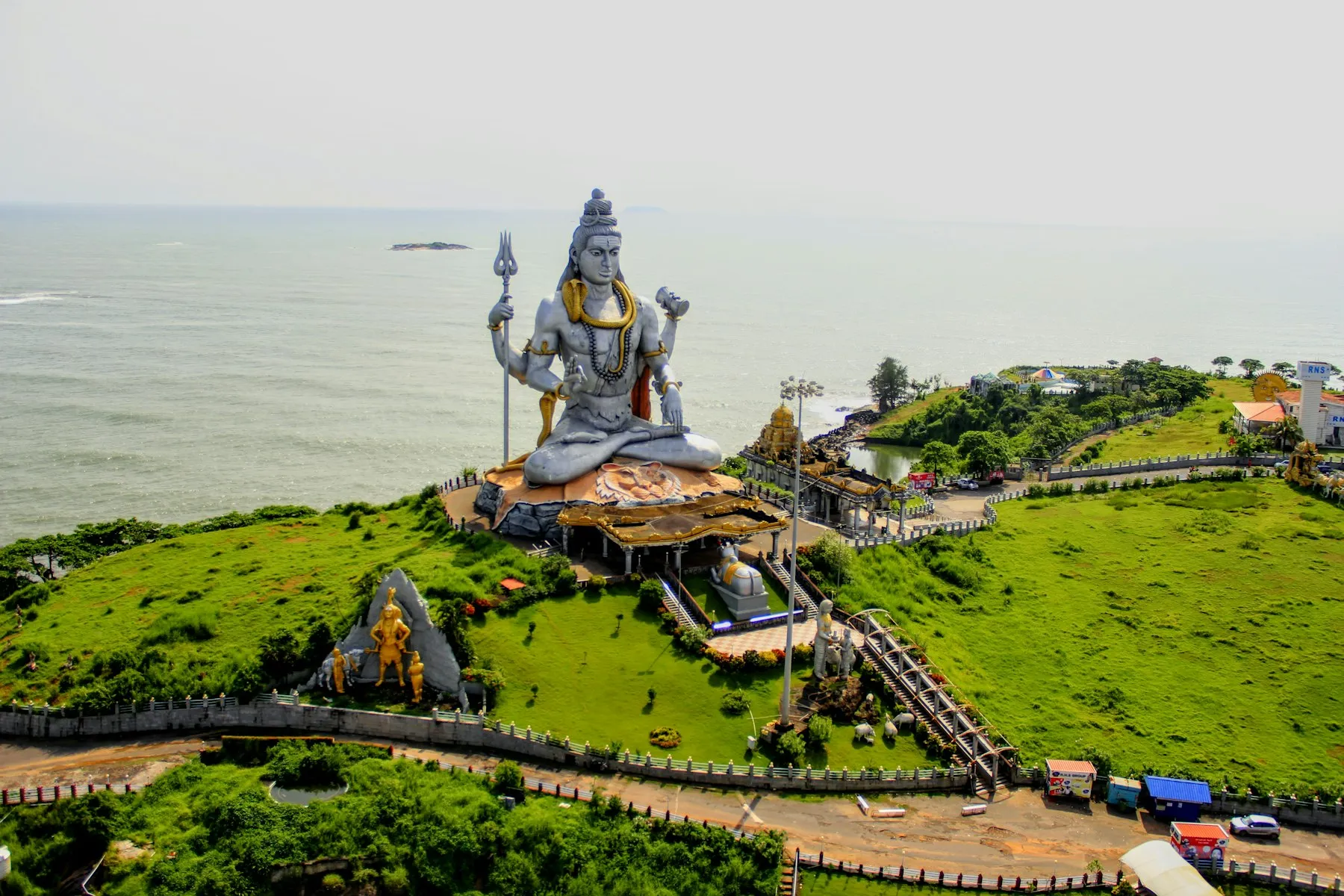 Murudeshwar’s Shiva on Kanduka Giri, with the sea on three sides. Photo: Tharun Kumar. U on Unsplash
Dive or snorkel at Netrani Island
Netrani is a heart-shaped island about 19 km off Murudeshwar and the best dive site on India’s west coast: coral, reef fish, and on good days turtles and whale sharks. You don’t need a certificate. A boat trip with snorkelling costs ₹2,000–2,500, a first-time “discover scuba” dive ₹4,500–6,500, and prices peak from December to mid-January. Visibility is best from February to April. Book a day ahead with a dive centre in Murudeshwar, and pack seasickness tablets and a dry bag for your phone: the boat ride takes about an hour each way.
Walk Gokarna’s cliff path from Kudle to the end of the coast
Gokarna’s beaches are separated by headlands, and the best way to see them is on foot. From Kudle it’s about 20 minutes over the hill to Om Beach, then 30–40 minutes of cliff path to Half Moon Beach. Another 20–30 minutes of scrambling takes you to the rocky cove signposted as Paradise Beach. Start by 08:00, wear trekking sandals or proper shoes, and carry water. You can get a boat back from Half Moon or Om, usually a few hundred rupees a seat when enough people share it.
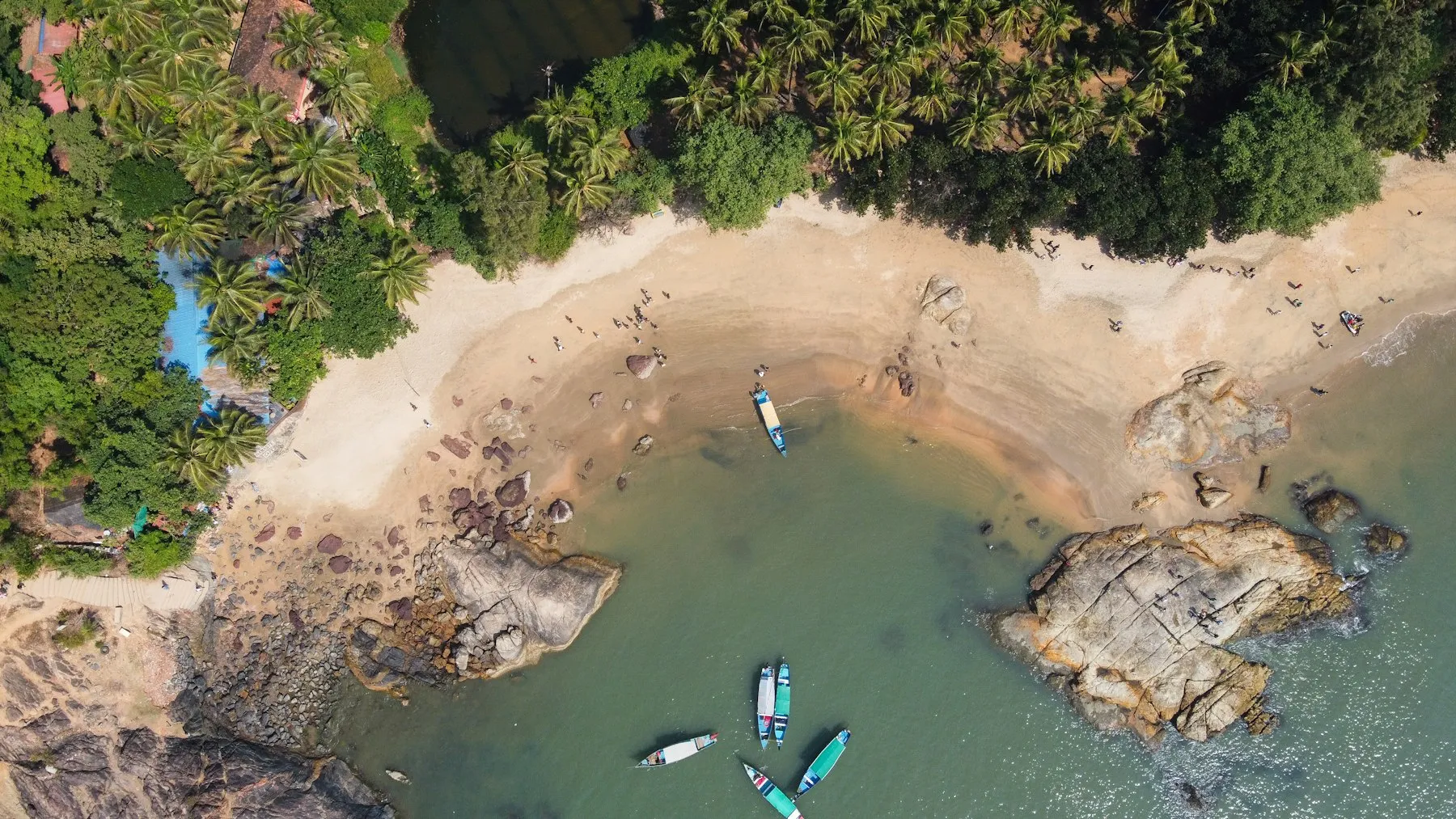 One of the coves along Gokarna’s cliff path, from above. Photo: Raman Choudhary on Unsplash
Off the beaten path
Kapu lighthouse at low tide
Kapu (Kaup) is a quiet beach 13 km south of Udupi with a lighthouse from 1901 standing on a pile of black rocks. You can climb the lighthouse for a small fee in the afternoon. The rocks around its base turn into a maze of tide pools at low tide. Buses on the Mangaluru–Udupi route stop at Kapu junction, a 15-minute walk away.
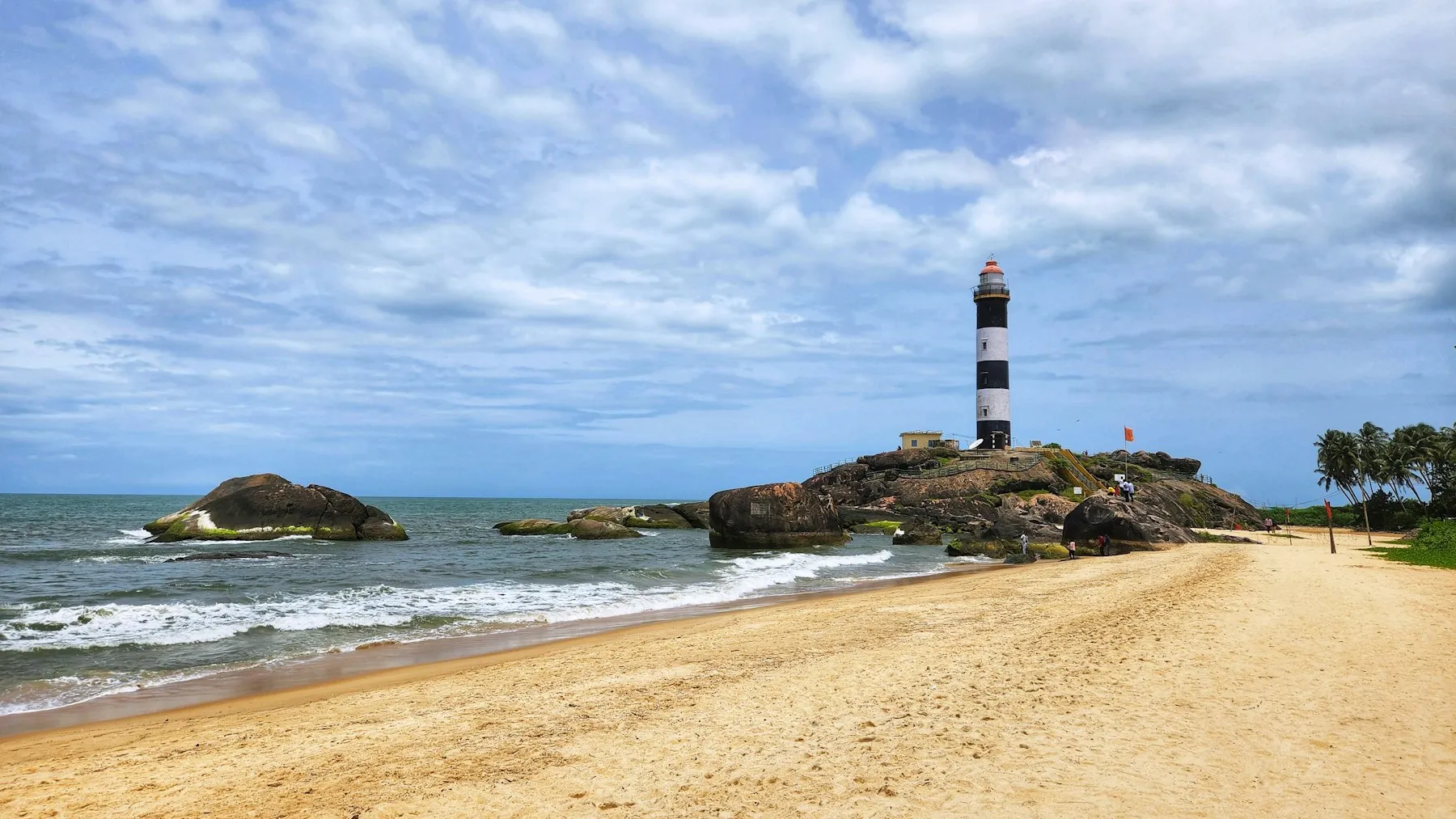 A lighthouse on the rocks of the Udupi coast. Photo: Hemendra Ahuja on Unsplash
Kodi Bengre and the Kemmannu hanging bridge
At Kodi Bengre a long sand spit runs between the Swarna River and the sea, about 10 km from Udupi. On the way, cross the Kemmannu hanging bridge over the backwaters, which local fishermen still use every day. Kayaking outfits nearby offer mangrove paddles at dawn for around ₹500–800, the best way to see kingfishers and herons.
Kasarkod’s Blue Flag beach and the Honnavar mangroves
Kasarkod near Honnavar is one of India’s Blue Flag beaches: clean, lifeguarded, and almost empty on weekdays. Close by, a wooden boardwalk runs through the mangroves along the Sharavathi River, and local boats take you up the backwaters to small river islands. It’s 30 km north of Murudeshwar, an easy stop on the way to Gokarna.
Mirjan Fort
Mirjan is a laterite fort with moats, wells and ramparts covered in moss, about 25 km from Gokarna near Kumta. It’s tied to Chennabhairadevi, the “Pepper Queen” who controlled the spice trade here in the 16th century. It’s free, rarely busy before 10:00, and the walls are best photographed in the soft morning light.
Yana’s black rocks
Yana is a pair of black limestone spires deep in the forest, about 50 km inland from Gokarna. The taller one, Bhairaveshwara Shikhara, rises roughly 120 m, with a cave shrine at its base. A paved path of about 500 m leads there from the parking area. Combine it with Mirjan Fort for a half-day trip by scooter or cab, and go after the monsoon, when the leeches have gone.
Things you probably didn’t know
- The rooftops came from Germany. The red Mangalore tiles on houses from Kerala to Goa started at a factory the Swiss–German Basel Mission set up in Mangaluru in 1865.
- Neer dosa is just “water dosa”. Neer means water in Tulu. The batter is so thin it’s poured almost like milk, and nothing goes into it but rice.
- The “Udupi hotel” on your street is named after this town. The vegetarian restaurants that spread across India serving masala dosa grew out of Udupi’s temple-kitchen cooking.
- Buffalo racing is still legal here. Kambala, where farmers race buffalo pairs down flooded paddy tracks, is held most winter weekends from November to March, and the fastest racers have been compared to Usain Bolt.
- Vasco da Gama named St Mary’s Island. Tradition says he landed there in 1498 on his way to Kerala and named it after the Virgin Mary.
- Tulu has no official script in common use. It’s spoken by millions in Dakshina Kannada and Udupi, but it’s mostly written in Kannada script, and campaigns to add it to India’s official languages keep coming back.
- Gokarna’s Om Beach really is shaped like the symbol. Two curves of sand meet at a rocky point, and the shape is clearest from the headland path above.
What to eat
- Kori rotti: Mangalorean chicken curry made with coconut milk, poured over dry, crisp rice wafers until they soften. It’s a lunch-home staple in Mangaluru.
- Chicken ghee roast: a fiery red, tangy dry roast made with Byadgi chillies and a lot of ghee. The Kundapura lunch homes are credited with creating it, and it’s worth the stop on your way north.
- Neer dosa: paper-thin rice crêpes, served in threes with chicken curry, coconut chutney or jaggery and grated coconut for breakfast.
- Mangalore buns: soft, slightly sweet fried breads made with ripe banana. Eat them warm at breakfast with coconut chutney and a filter coffee.
- Goli baje: fluffy fried dumplings made with curd and maida. Udupi’s old cafés serve them at teatime with coconut chutney.
- Kane rava fry: ladyfish coated in semolina and fried crisp. Order it on the side of any fish thali.
- Gadbad ice cream: a tall sundae of jelly, fruit, nuts and three flavours of ice cream. Mangaluru’s ice-cream parlours made it famous, so finish a hot day there with one.
A suggested itinerary
Day 1: Down the ghats to Mangaluru
- Morning: 07:00 Gomateshwara Express from Yesvantpur, in a vistadome seat.
- Afternoon: The Sakleshpur–Subrahmanya ghat section; arrive at Mangaluru Junction around 16:30.
- Evening: Sunset at Panambur Beach, dinner of fish curry and neer dosa.
Day 2: Mangaluru
- Morning: Mangalore buns and coffee, then the Kudroli Gokarnanatha temple and the Sultan Battery watchtower.
- Afternoon: Lunch home thali with kane fry, then the St Aloysius Chapel paintings.
- Evening: Someshwara Beach and its rocks, then gadbad ice cream.
Day 3: Kapu and Udupi
- Morning: Bus to Kapu for the lighthouse and tide pools.
- Afternoon: Udupi’s Sri Krishna Matha and Car Street; goli baje and coffee.
- Evening: Sunset at Malpe Beach; stay in Udupi or Malpe.
Day 4: St Mary’s and the Maravanthe road
- Morning: First ferry to St Mary’s Island.
- Afternoon: Ghee roast lunch in Kundapura, then north along the Maravanthe stretch.
- Evening: Murudeshwar gopuram at sunset; stay in Murudeshwar.
Day 5: Netrani or the mangroves, then Gokarna
- Morning: Dive or snorkel at Netrani, or Kasarkod beach and the Honnavar mangroves if you’d rather stay dry.
- Afternoon: Drive or train north to Gokarna (about 75 km).
- Evening: Mahabaleshwar temple lanes, then a sunset on Kudle Beach.
Day 6: Gokarna’s beaches, then home
- Morning: Cliff walk from Kudle to Om, Half Moon and Paradise.
- Afternoon: Boat back, a final thali in town, check out.
- Evening: Panchaganga Express from Gokarna Road around 18:30, back in Bengaluru by morning.
What it costs
| Item | Budget | Mid-range |
|---|---|---|
| Stay (per night) | ₹1,200 | ₹3,500 |
| Food (per day) | ₹600 | ₹1,500 |
| Local transport (per day) | ₹500 | ₹1,800 |
| Entry fees and ferries (per day) | ₹500 | ₹1,000 |
| Total per day | ₹2,800 | ₹7,800 |
On top of this, budget ₹1,000–2,500 for the train or bus each way from Bengaluru, and ₹2,000–6,500 if you dive at Netrani. The mid-range column assumes a hired car for two of the six days.
Good to know
- Monsoon changes everything. From June to September the sea is closed to swimming, the St Mary’s ferry and Netrani dives stop, and the Shiradi Ghat can close. The ghat train is at its greenest then, though.
- The sea here is stronger than it looks. Rip currents drown swimmers every year at Murudeshwar, Maravanthe and Gokarna’s Om Beach. Swim only where lifeguards are posted and the flags say so. The sun is fierce on the water too: reef-safe sunscreen is kinder to Netrani’s coral.
- Temples have dress codes. Cover shoulders and knees. At several temples, including Gokarna’s Mahabaleshwar, men are asked to remove their shirts before the inner shrine.
- Book trains early. The vistadome and the Panchaganga sell out weeks ahead over long weekends; check IRCTC for tatkal if you’re late.
- Lunch homes run on lunch. Many close between 15:00 and 19:00, and the best fish sells out by 14:00.
- UPI works almost everywhere, but carry ₹1,000–2,000 in cash for boats, beach shacks and autos in Gokarna. Visiting from abroad? An Airalo India eSIM gets you data the moment you land, and a policy like SafetyWing covers the dive and the scooter.
- Mobile signal drops on the ghat section and on the Gokarna cliff path; download offline maps before you go, and keep a power bank charged for the long train day.
- Respect the rituals. Kambala races and Bhoota Kola performances are open to visitors, but ask before photographing anyone in costume, and never step into the performance space.
Final word
The ghat train is the right way in because it shows you the change before the coast begins: the hills, the tunnels, then the first red roofs and the smell of the sea. Six days later you’re on a cliff above Om Beach, a full thali and a ferry ride from where you started, wondering why you kept going to Goa.
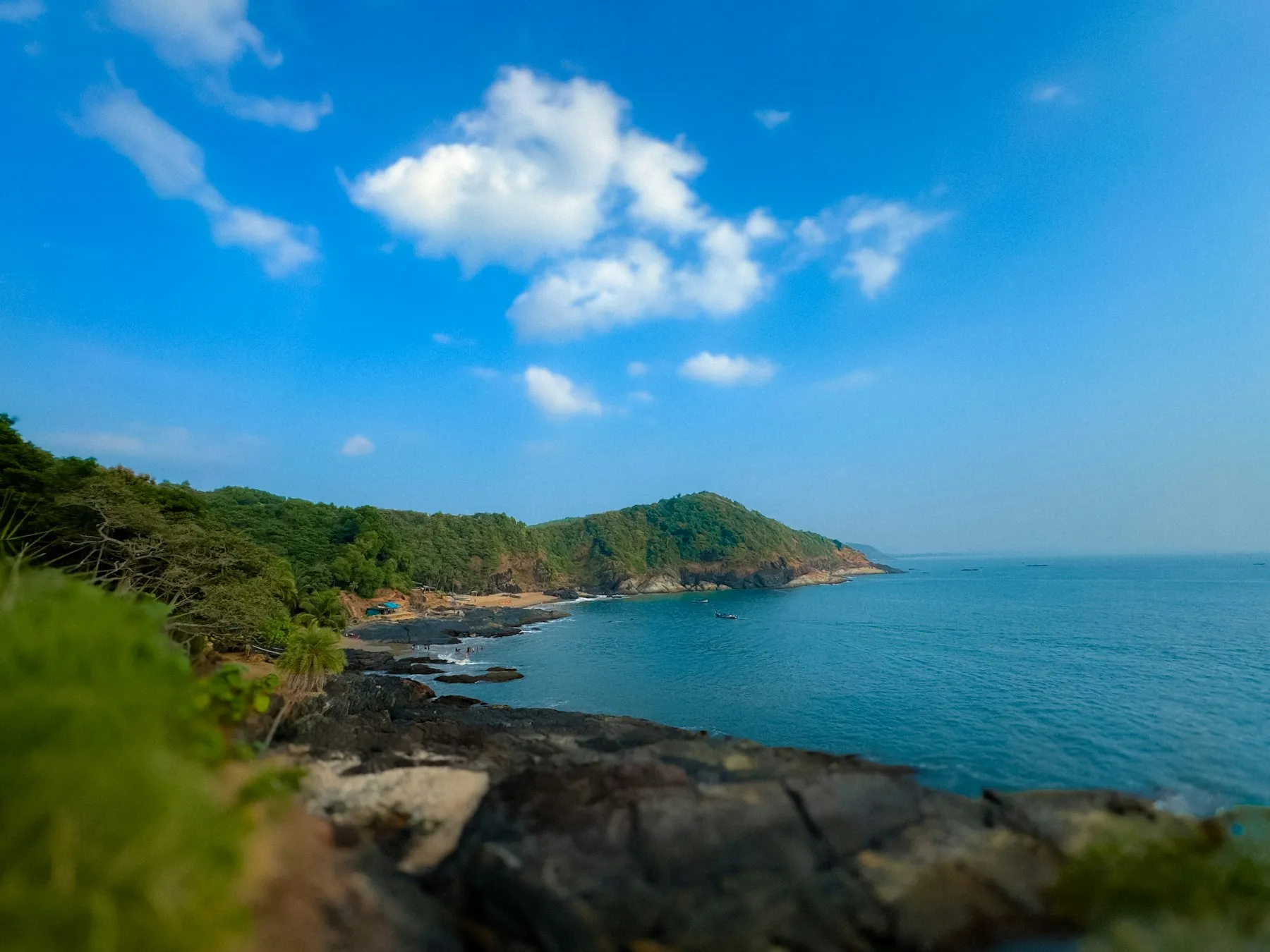
Cover: the headland at Gokarna. Photo: Tirth Jivani on Unsplash.
Enjoyed this story?
Pass it on to someone planning a trip:
More from the road
 Kochi, Alleppey, Varkala and Thiruvananthapuram, India
Kerala's coast in five days from Bengaluru: Kochi, Alleppey, Varkala and Thiruvananthapuram
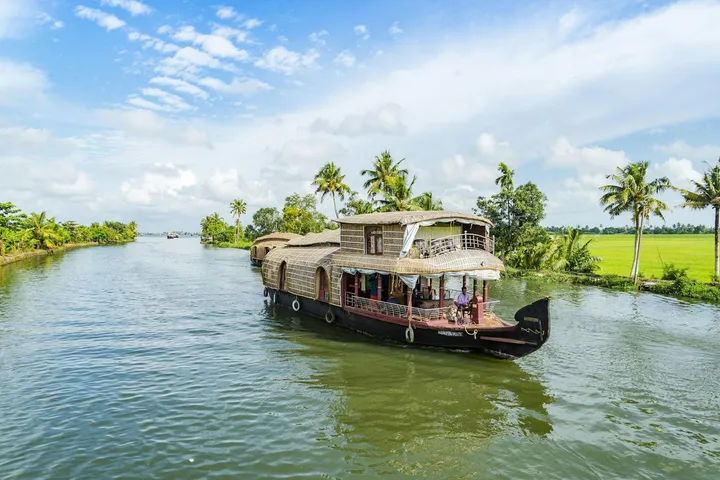
A five-day road trip down Kerala's coast from Bengaluru: Fort Kochi's fishing nets, a houseboat on the Alleppey backwaters, palpayasam at Ambalappuzha, the cliffs of Varkala, the giant Jatayu sculpture and the Padmanabhaswamy temple, with trains, drive times, checked hotels and costs in rupees.
 Wayanad, India
Bengaluru to Wayanad: four days of forests, caves and coffee
A four-day road trip from Bengaluru through Bandipur to Wayanad: Edakkal's carved cave, a jeep safari in Muthanga, Banasura's reservoir, Thirunelli and Kuruva, with real bus fares, safari timings and the night-ban rules you need to plan around.
 Kochi, Munnar, Thekkady, Alleppey and Marari, India
Kerala in fifteen days over Christmas: Kochi, Munnar, Thekkady and the backwaters
Fifteen days in Kerala over Christmas and New Year from the US: Fort Kochi's churches and star lanterns, Christmas Eve in the tea hills of Munnar, Periyar's forest, a night on a backwater houseboat and quiet days on Marari beach, with flights, the e-Visa, prices in dollars and checked stays.
Comments
Loading comments…