Dubai in five days from India: towers, souks, dunes and the Creek
Five days in Dubai from India: the Burj Khalifa, the old Creek and souks, a desert evening and Global Village, with visa rules, metro fares, checked hotels and costs in rupees for winter 2026.
Some links in this story are affiliate links: if you book through them, the blog earns a small commission at no extra cost to you. Picks are chosen on reviews and value, never on commission.
In this story
At a quarter to six in the evening an abra pushes off from the Bur Dubai side of the Creek, and the driver collects one-dirham coins from a boatload of strangers. Behind you the wind-towers of Al Fahidi turn gold. Ahead, the spice souk is switching on its lights. Far off to the south, the top floors of the Burj Khalifa catch the last of the sun. The crossing costs about ₹24, and it is the quickest way to understand why this city exists.
This trip is for anyone in India with five days and a passport, including first-timers abroad. Dubai is a three-to-four-hour flight away and easy to do without a tour group. It is also much more than malls: there is a working old quarter, a desert forty minutes from the towers, and a skyline worth planning one whole evening around. It suits couples, families and friends on a long weekend.
At a glance
| Best time to go | November to March, when days are around 24–30°C |
| Days you need | 5 days, 4 nights |
| Getting there | Nonstop flights of 3 to 4 hours from most Indian metros |
| Daily budget | ₹11,000 – ₹25,000 (about $125 – $285) |
| Language | Arabic and English; Hindi and Urdu are widely understood |
| Currency | UAE dirham (AED); 1 AED is about ₹24 |
| Good for | Skyline views, souks, desert evenings, shopping, families, first trips abroad |
Why go
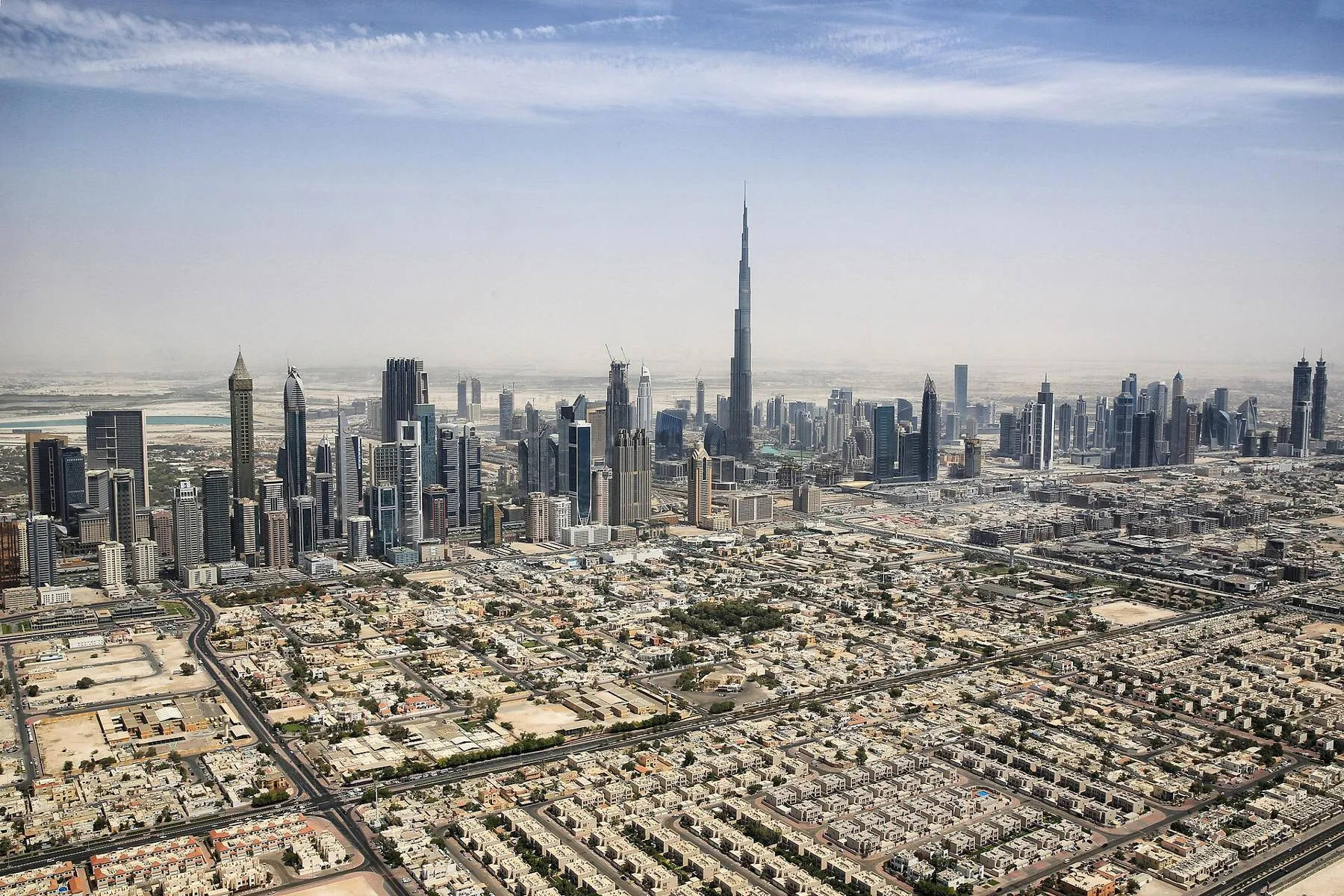
A little over a century ago Dubai was a pearling and trading village on a creek. You can still stand on that creek and watch wooden dhows being loaded with tyres, rice and fridges for Iran and East Africa. A short metro ride away is the tallest building on Earth, at 828 metres, and a fountain that throws water higher than a 40-storey tower. Few cities let you see the whole story, from trading post to world city, in a single afternoon.
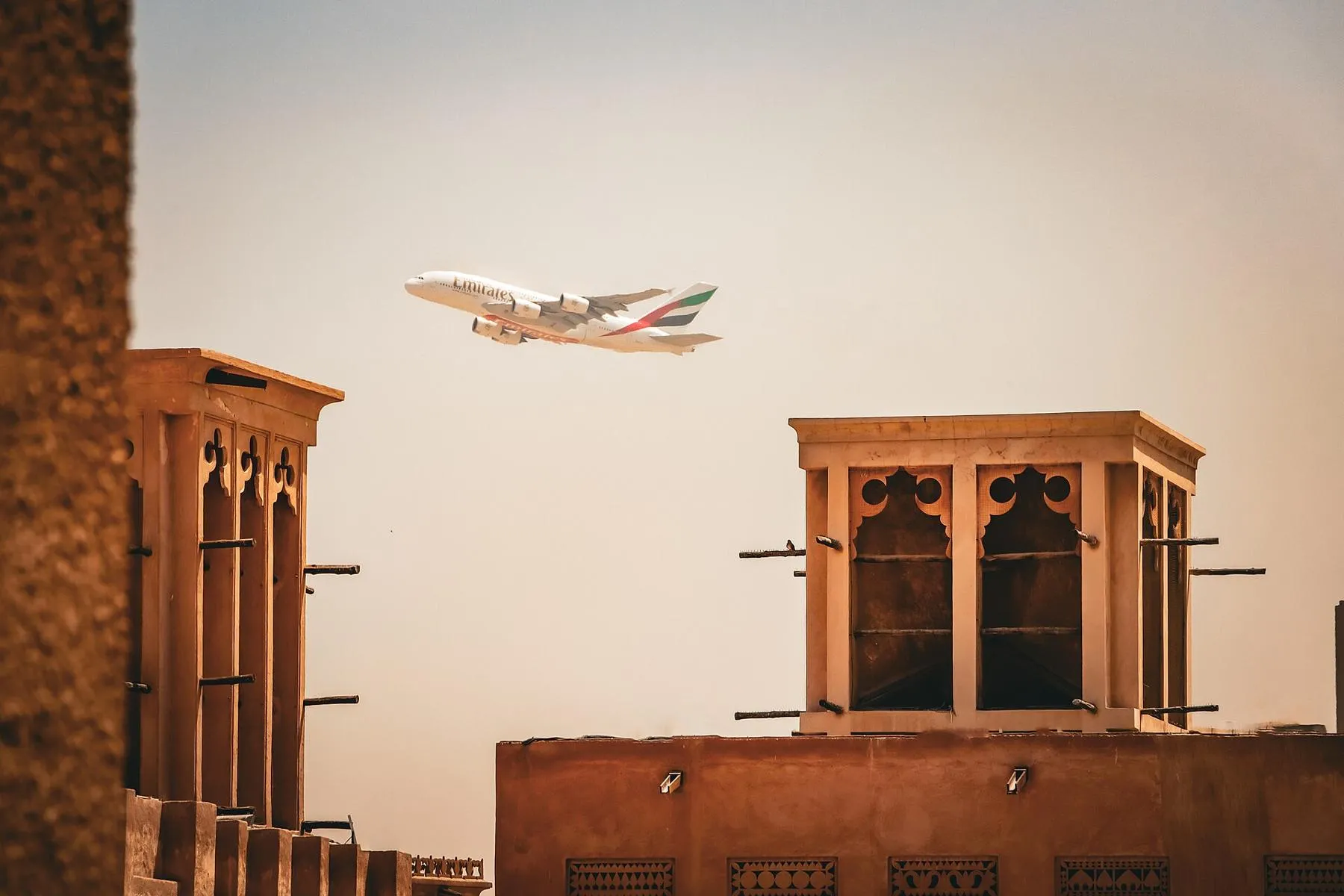 Wind towers in Al Fahidi, old Dubai. Photo: Delta.jpg, CC BY-SA 4.0, via Wikimedia Commons

It is also easy from India. The flight is shorter than Delhi to Kochi, the city runs on a driverless metro, and you will hear Hindi, Malayalam and Tamil in shops and cafeterias. Prices come in every range, from a ₹400 plate of biryani in Karama to a five-figure brunch. Five days covers the big sights, the old quarter and a desert evening without rushing.
Getting there
Flights: Dubai International (DXB) is one of the best-connected airports from India, with nonstop flights from Delhi, Mumbai, Bengaluru, Hyderabad, Chennai, Kochi, Kolkata, Ahmedabad, Jaipur, Lucknow and many smaller cities. Emirates, flydubai, IndiGo, Air India and Air India Express fly the route. The flight takes about 3 hours from Mumbai and Ahmedabad, 3.5 hours from Delhi and Bengaluru, and about 4 hours from Kolkata. Return fares are often ₹20,000–35,000 in economy, and they jump around Diwali, Christmas and New Year, so book six to eight weeks ahead. Sharjah (SHJ) is often cheaper, about 30 to 60 minutes away by taxi depending on traffic.
Flights in winter 2026: After the Iran war that began in February 2026, Gulf flying is mostly back to normal, but individual routes still get cancelled at short notice. In mid-November 2026, Dubai Airports listed SpiceJet’s Dubai flights to Mumbai, Jaipur and Amritsar as cancelled. Book a fare you can change, and check your exact flight number with the airline a day or two before you leave.
Time difference: Dubai is 1 hour 30 minutes behind India, so there is no real jet lag.
Visa: Most Indian passport holders need a UAE visa before they fly. The usual choice is a 30-day tourist e-visa through your airline, a travel agent, or Dubai’s official GDRFA portal. Through an agent, expect to pay roughly ₹7,500–9,500 all in, with 2 to 4 working days to process. If you hold a valid US visa or US green card, you can usually get a 14-day visa on arrival instead. Other residence permits have been added and removed over the past year, so check the current list on the official ICP site or with your airline before you rely on it. You will also need a passport valid for six months, a return ticket and a hotel booking.
Getting around
- Dubai Metro: The Red Line runs from the airport through Deira and along Sheikh Zayed Road to Burj Khalifa/Dubai Mall and the Marina. The Green Line covers the old city on both sides of the Creek. Fares depend on zones: AED 3 within one zone, AED 5 across two and AED 7.50 beyond that (about ₹70–180). Buy a Silver Nol card at any station for AED 25, which includes AED 19 of credit, and use it on metro, buses, tram and water buses. The Gold Class carriage costs double, and one carriage on every train is for women and children only.
- Taxis and apps: Taxis are metered and honest. Careem and Uber both work and can book RTA taxis too. A 15-minute ride usually costs AED 25–40. Avoid Sheikh Zayed Road at rush hour.
- Abras: The old wooden boats cross the Creek for AED 1. Air-conditioned abras and water taxis cost a little more.
- Tram: The Dubai Tram links Dubai Marina, JBR and the Palm Jumeirah monorail.
- Walking: Al Fahidi, Al Seef, Downtown and the Marina are walkable, but even in winter the midday sun is strong. Walk in the morning or after 4 pm.
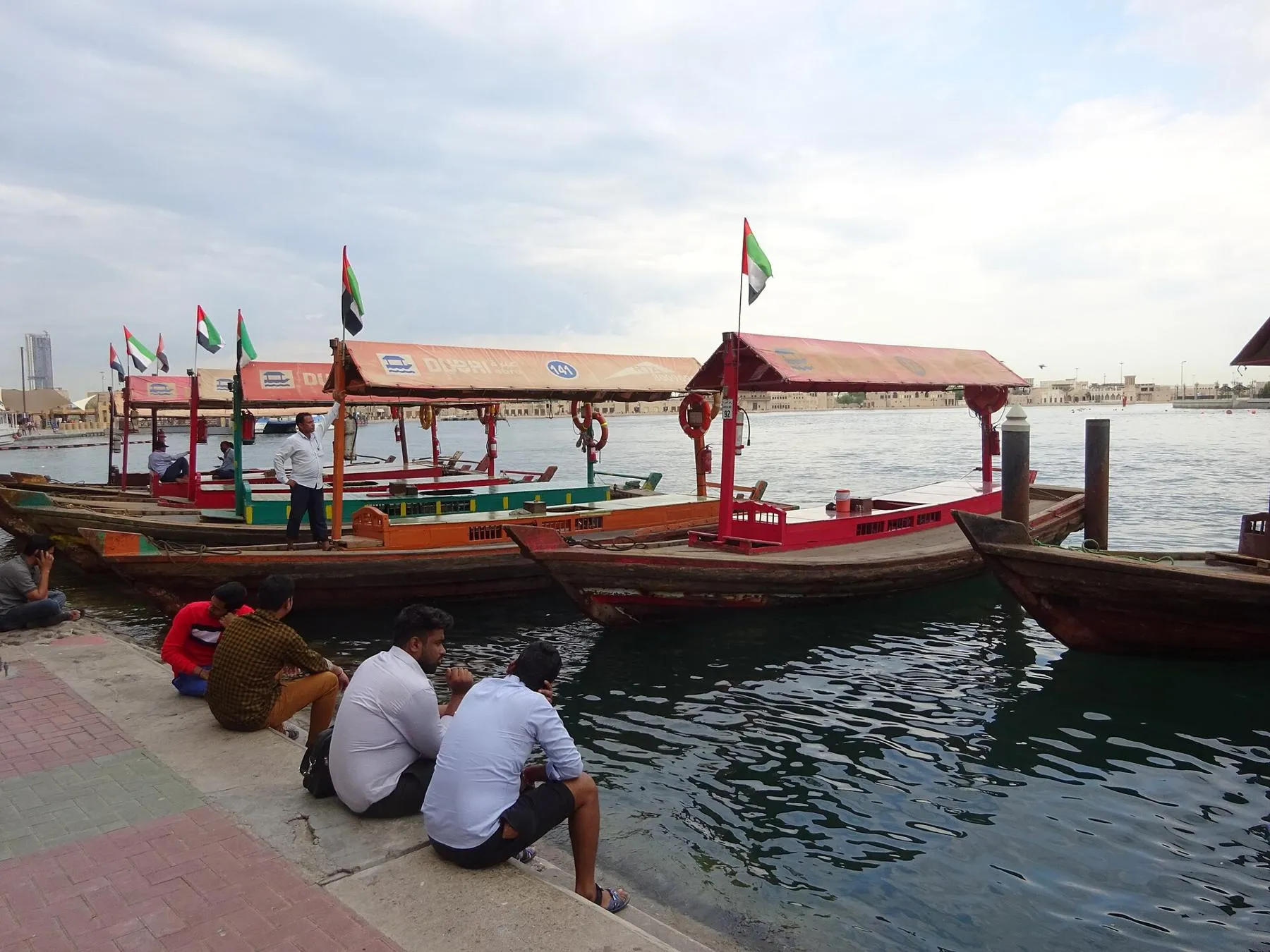 Abras waiting on the Creek. Photo: Jpbowen, CC BY-SA 4.0, via Wikimedia Commons

Where to stay
- Bur Dubai and Al Fahidi (old Dubai): the best area for character and the cheapest for food, near the Creek, the souks and the Green Line. XVA Art Hotel has just nine rooms in a wind-tower house inside the Al Fahidi quarter, with a gallery in the courtyard (8.9 from about 930 reviews on Agoda, around ₹7,800 a night before taxes). Al Seef Heritage Hotel, Curio Collection by Hilton is a bigger heritage-style hotel on the Creek promenade (8.9 from about 5,500 reviews, around ₹8,600).
- Downtown Dubai: the area around the Burj Khalifa and Dubai Mall, with the fountain at your door. Rove Downtown is a well-run, good-value three-star near the mall, and some rooms look at the tower (9.3 from about 13,200 reviews, around ₹8,100). Most other hotels here are five-star and priced to match.
- Dubai Marina and JBR: a beachfront district with a waterside walk, plenty of restaurants and the tram. Good for families who want beach time. Rove Dubai Marina, from the same chain, scores 9.1 on Agoda from about 8,300 reviews (around ₹12,200).
- Deira: across the Creek, near the gold and spice souks and close to the airport. It is noisier and plainer, but it has the cheapest rooms in central Dubai.
Ratings and prices are from Agoda for a December weeknight, checked in November 2026; prices are for a double room before taxes. Hotels across Dubai have been discounting since the spring of 2026, when occupancy fell sharply, so compare prices before you book. Hotels also add the Tourism Dirham fee of AED 7–20 per room per night, depending on the star rating.
Top things to do
Go up the Burj Khalifa
At 828 metres, the Burj Khalifa has been the world’s tallest building since it opened in 2010. “At the Top”, on levels 124 and 125, is the standard visit, and the lift takes about a minute. Adult tickets cost about AED 173 at off-peak times and about AED 250 in the prime late-afternoon slot (roughly 4 to 7 pm), when everyone wants the sunset. A booking at about 3:30 pm, just before prime time, gets you daylight views, and you can stay to watch the city lights come on. Book online, since tickets at the door cost more and sell out.
Watch the fountain and walk through Dubai Mall
The Dubai Fountain plays every 30 minutes in the evening on the lake below the Burj Khalifa, with jets as tall as a 50-storey building moving to music. It is free; the bridge to Souk Al Bahar gives the best view. Dubai Mall next door has about 1,200 shops, an ice rink and a two-storey aquarium tank you can see from the main floor for free. Even if you are not shopping, walk through it once.
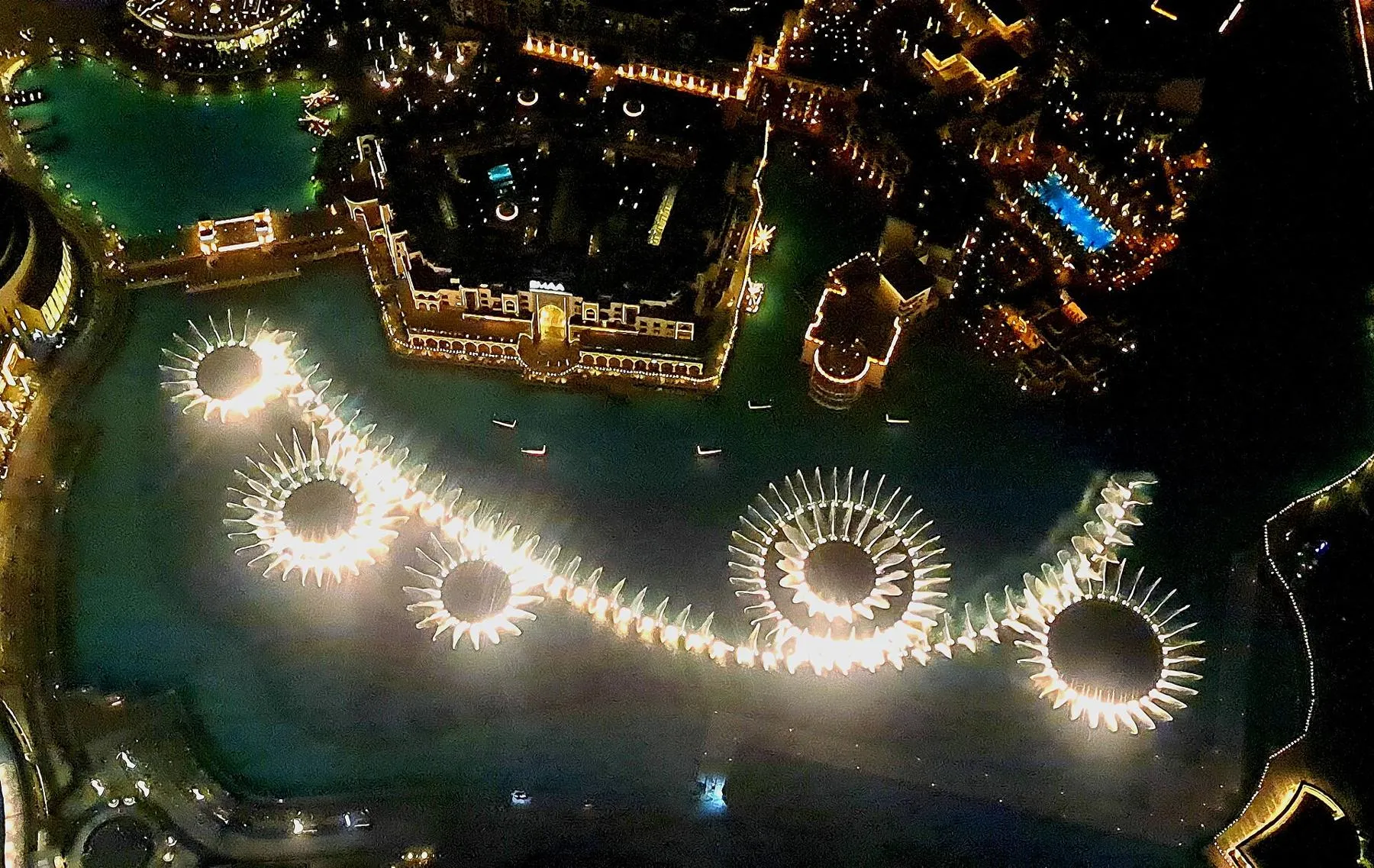 The Dubai Fountain from above. Photo: Amzexplorersfamily, CC BY-SA 4.0, via Wikimedia Commons

Take an abra across the Creek
The Creek is where Dubai began. Walk to the Bur Dubai abra station by the old souk, hand the driver one dirham, and sit on the open deck for the five-minute crossing to Deira. Go just before sunset, then walk back along the waterfront. On the Deira side, the wharf is still busy with dhows loading cargo by hand, much as it was decades ago.
Wander the Gold, Spice and Textile Souks
Just off the Deira abra station, the Gold Souk sells jewellery priced by weight at that day’s gold rate plus a making charge, which is the part you can bargain on. Next door, the Spice Souk is a few lanes of saffron, dried limes, frankincense and dried rose petals. Across the Creek, the covered Bur Dubai souk sells textiles and pashminas. Remember India’s customs limits on gold when you fly home.
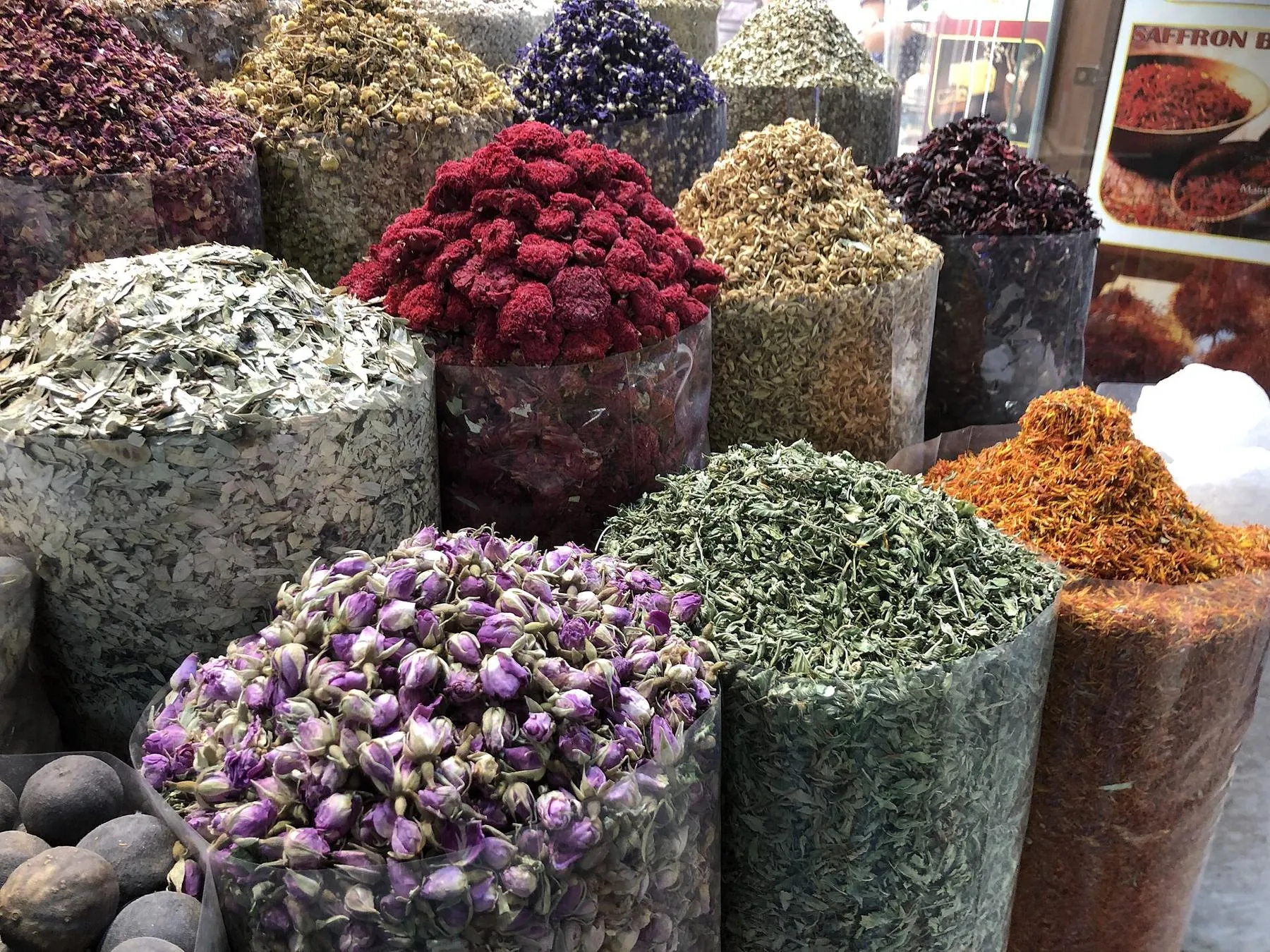 The Spice Souk in Deira. Photo: Frodlekis, CC BY-SA 4.0, via Wikimedia Commons

Spend an evening in the desert
A desert safari is the classic Dubai evening. A 4x4 collects you in the afternoon for dune bashing, then a camp with camel rides, henna, a barbecue dinner and shows. Desert safari with BBQ dinner and quad-bike options is the most-reviewed one on GetYourGuide (4.9 from almost 24,000 reviews), from about $56 (around ₹5,000). Skip the dune bashing if you get car sick: it is very bumpy.
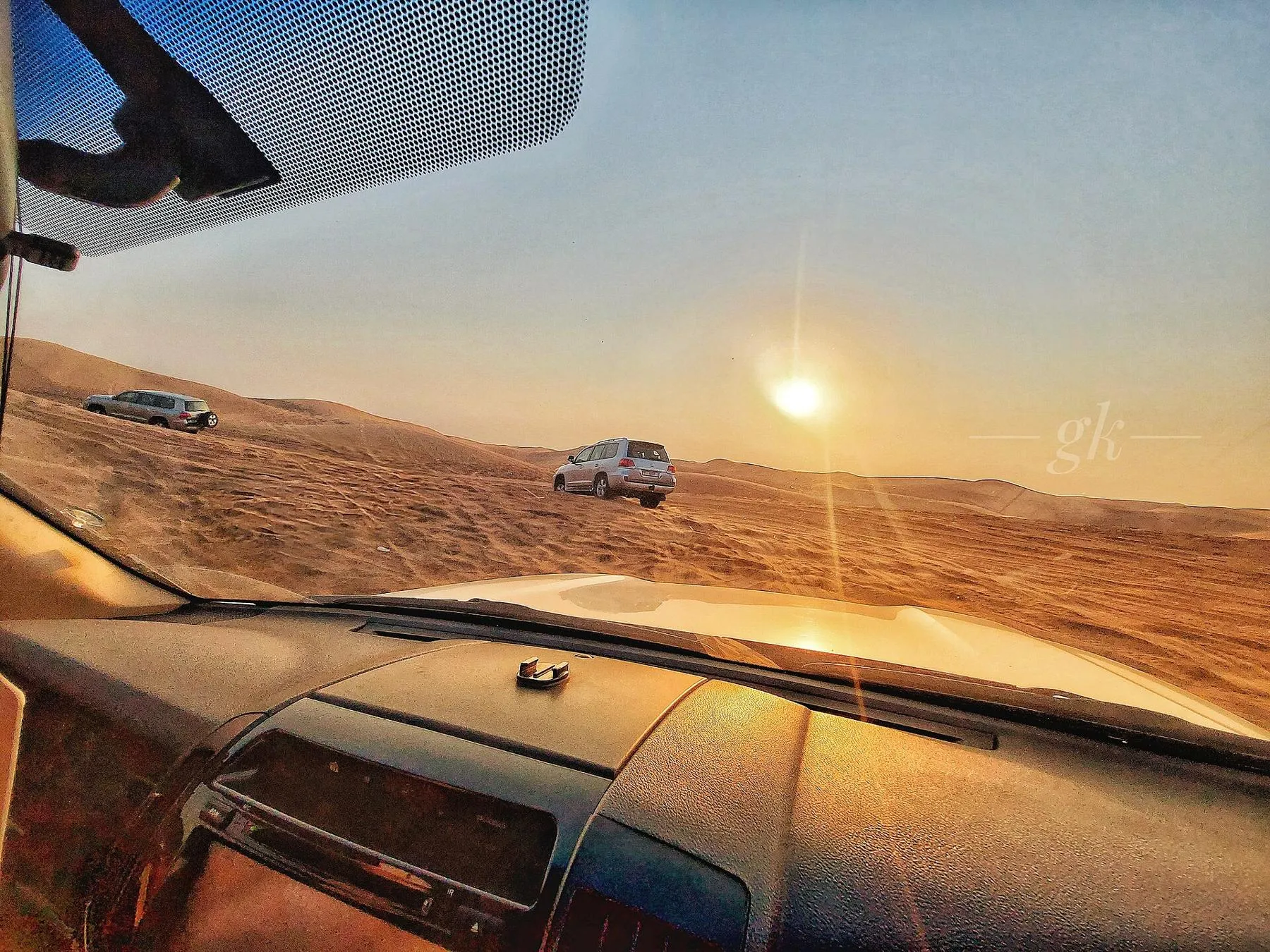 Dune bashing at sunset. Photo: Gopikrishnan9691, CC BY-SA 4.0, via Wikimedia Commons

Walk through Old Dubai with a guide
Al Fahidi’s narrow lanes, wind-towers and courtyard houses are easy to explore alone, but a guide adds the stories and the food. The Old Town, Abra Cruise, Museums, Souks and Street Food tour covers the abra, the souks and street-food tastings in 2.5 to 4 hours (4.8 from about 11,500 reviews, from about $27, around ₹2,400). On your own, the Sheikh Mohammed Centre for Cultural Understanding in Al Fahidi runs cultural meals where you can ask anything about Emirati life.
See the city from the Dubai Frame
The Dubai Frame is a 150-metre-tall picture frame in Zabeel Park, with a glass-floored bridge across the top. Look one way to old Dubai and the Creek, and the other way to the towers on Sheikh Zayed Road. Tickets cost AED 50 for adults and AED 20 for children aged 3 to 12. It is open from 9 am to 9 pm every day. Late afternoon gives the best light, and an hour is enough.
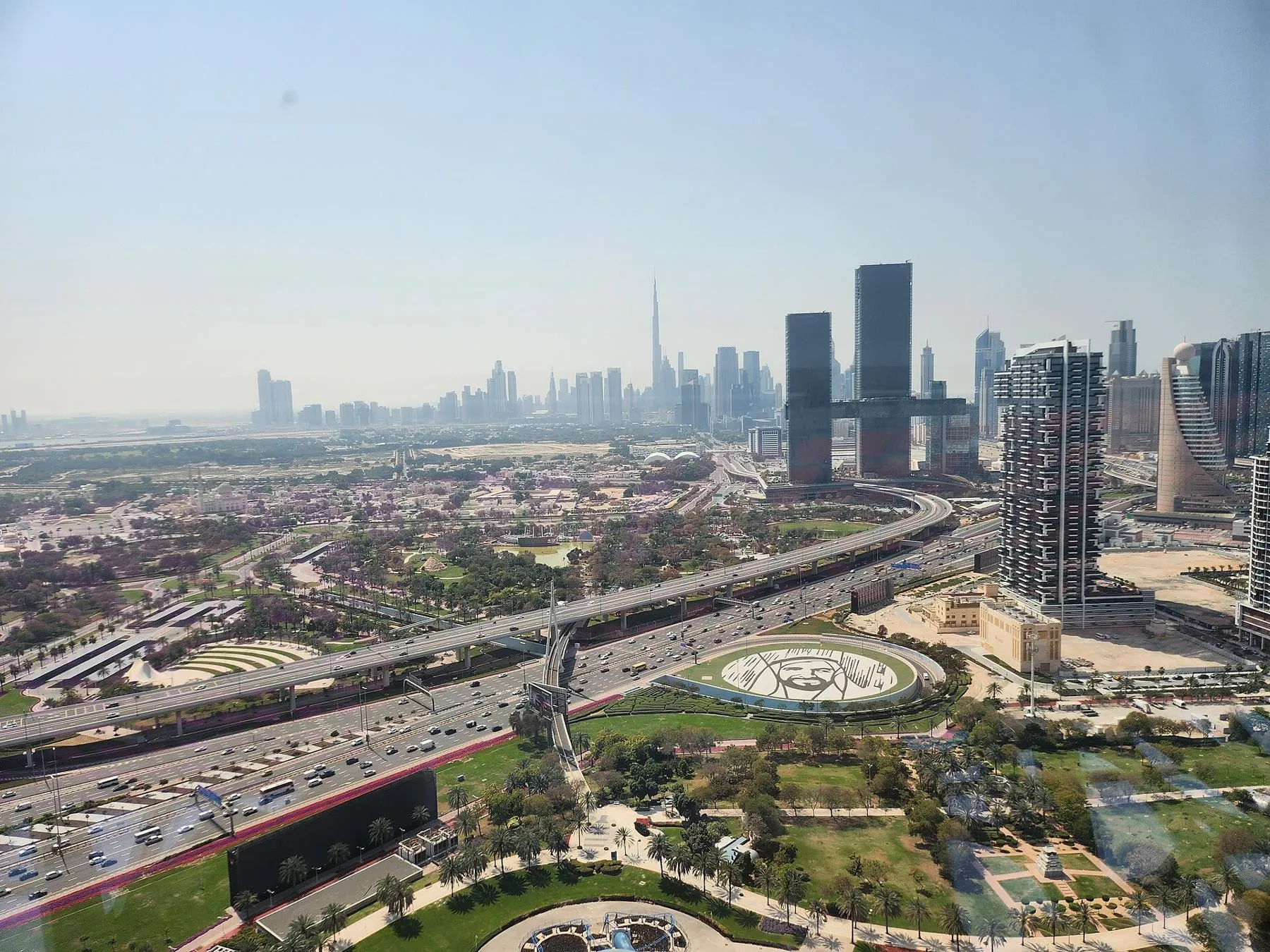 The view south from the top of the Frame. Photo: Saaremees, CC BY-SA 4.0, via Wikimedia Commons

Spend a night at Global Village
Global Village is a huge winter fair of country pavilions, food stalls, rides and stage shows on the edge of the city. Its 31st season runs from 14 October 2026 to May 2027, and the gates open at 6 pm. Entry is about AED 25 on weekdays and AED 30 at weekends, which now include Sundays. The India pavilion is enormous, but the real fun is eating your way through Turkish, Yemeni and Korean stalls. Allow at least three hours, and take a taxi or the RTA bus.
Off the beaten path
Alserkal Avenue
Alserkal Avenue, in the Al Quoz industrial district, is a block of old warehouses turned into galleries, an independent cinema, bookshops and cafes. It is the best place to see contemporary art from the Gulf, Iran and South Asia, and most galleries are free. Go on a weekday afternoon by taxi, as the nearest metro station is a long, hot walk away.
Ras Al Khor Wildlife Sanctuary
At the inland end of the Creek, ten minutes from Downtown, this protected wetland is home to large flocks of flamingos in winter, with the towers rising behind them. There are free birdwatching hides on its edge, with binoculars inside. Check the opening hours before you go, take a taxi, and bring a zoom lens.
Hatta
About 90 minutes east of the city, in the Hajar Mountains, Hatta has a turquoise dam lake for kayaking, a restored heritage village, mountain-bike trails and cooler air. It is where Dubai residents escape at weekends. Drive there, book a tour, or check RTA’s bus timetable, and go early.
Sharjah’s old town and museums
Sharjah, the neighbouring emirate, is the UAE’s cultural capital. The Museum of Islamic Civilization and the restored Heart of Sharjah quarter are each worth an hour, and entry is cheap. It is a dry emirate, so there is no alcohol anywhere. Go outside rush hour, as the Dubai to Sharjah road is one of the slowest in the country.
Al Seef by night
Al Seef is a promenade along the Creek, built to look like old Dubai with coral-stone houses and wooden balconies. It is quieter than Downtown and comes alive after dark. The restaurants face the water, and abras and dhows go past. Walk from the Al Fahidi end to the newer section for the best of it.
Things you probably didn’t know
- The Burj Khalifa is far taller than any other building. At 828 m it is roughly 150 m taller than the next-tallest, Merdeka 118 in Kuala Lumpur.
- Indians are Dubai’s largest community. People from India make up the biggest single group in the city, which is why Hindi, Malayalam and Urdu are heard everywhere.
- The weekend moved in 2022. The UAE switched to a Monday-to-Friday working week, with Friday a half day, so the weekend is now Saturday and Sunday.
- The Palm Jumeirah was built from sand and rock. It was made from sand dredged from the sea floor and millions of tonnes of quarried rock, with no concrete.
- The metro has no drivers. The Red Line opened in 2009, and every train runs fully automatically.
- Pearls came before oil. Until the 1930s, pearl diving was Dubai’s main industry, and the Creek’s dhows come from that fleet.
- The Frame looks two ways. The Dubai Frame was built so that it frames old Dubai on one side and the new city on the other.
What to eat
- Shawarma: spit-roasted chicken or lamb rolled in flatbread with garlic sauce and pickles, for about AED 8–15 at corner shops. Satwa’s Al Mallah is a long-running favourite.
- Machboos: spiced rice cooked with chicken or lamb and dried lime, one of the most popular Emirati dishes. Try it at Al Fanar in Al Seef.
- Luqaimat: small crisp dumplings soaked in date syrup and topped with sesame, sold fresh at Al Seef, Global Village and Emirati cafes.
- Karak chai: strong, sweet milky tea with cardamom, served in paper cups for AED 1–2 at corner cafeterias in Karama and Bur Dubai.
- Falafel and hummus with khubz: chickpea fritters and a creamy chickpea dip with warm flatbread, found at any Lebanese or Syrian restaurant.
- Malabar biryani and parotta: Karama and Bur Dubai are full of Kerala and South Indian restaurants, with full meals for AED 15–25.
- Umm Ali: a warm bread pudding baked with milk, nuts and raisins, the classic dessert at Arab restaurants.
A suggested itinerary
Day 1: Arrive and old Dubai
- Morning: Land at DXB, take the metro to your hotel and drop your bags.
- Afternoon: Walk through the Al Fahidi lanes and courtyard cafes.
- Evening: Abra across the Creek at sunset, then dinner and karak chai in Deira.
Day 2: Souks and the skyline
- Morning: Gold and Spice Souks before the crowds and the heat.
- Afternoon: Metro to Downtown, then lunch and a walk through Dubai Mall.
- Evening: Burj Khalifa at about 3:30 pm, then the fountain shows after dark.
Day 3: Frame, art and Global Village
- Morning: Dubai Frame when it opens, then a coffee in Zabeel Park.
- Afternoon: Alserkal Avenue’s galleries, then a rest at the hotel.
- Evening: Global Village from 6 pm, with dinner at the stalls.
Day 4: Beach and desert
- Morning: Swim at JBR or Kite Beach, with a view of the Burj Al Arab.
- Afternoon: Pickup for the desert safari and dune bashing.
- Evening: Camp dinner, camel ride and shows, back by about 9 pm.
Day 5: Flamingos, shopping and home
- Morning: Ras Al Khor’s flamingos, or a guided Old Dubai food walk.
- Afternoon: Buy dates, saffron and Arabic sweets at a supermarket or the souk.
- Evening: Metro to the airport, three hours before departure.
What it costs
| Item | Budget | Mid-range |
|---|---|---|
| Stay (per night) | ₹5,500 | ₹13,000 |
| Food (per day) | ₹2,000 | ₹5,000 |
| Local transport (per day) | ₹700 | ₹1,500 |
| Entry fees and tours (per day) | ₹3,000 | ₹5,500 |
| Total per day | ₹11,200 | ₹25,000 |
This does not include flights (about ₹20,000–35,000 return) or the visa (about ₹7,500–9,500). Entry fees vary a lot from day to day: the Burj Khalifa (about ₹4,200 off-peak) and the desert safari are the big ones, while a day of souks, abras and beaches costs almost nothing. Eat in Karama and Deira, where a full meal costs AED 15–25, and use the metro to keep the budget low.
Good to know
- Check the news before you book. The Iran war that began in February 2026 hit Dubai directly. The airport was struck twice in March, and drones and missiles fell on the UAE. A ceasefire followed in April, but there have been flare-ups since. As of November 2026 Dubai is open and India flights are running, and India’s foreign ministry has no advisory against the UAE. Look at the Dubai government’s travel advisory and the news a week before you go, and follow any official shelter alert while you are there.
- Buy insurance that covers conflict. Many travel policies exclude war and hostilities. Read the wording, and get it in writing that the policy covers cancellations and evacuation caused by the conflict.
- Dress and behave. Dubai is relaxed, but cover your shoulders and knees in malls, souks and old districts. Kissing in public, swearing and rude gestures can lead to fines, and you should never photograph strangers, especially women, without asking.
- Alcohol rules. Alcohol is served only in licensed hotels, bars and restaurants. Never drink in public, and never drive after drinking at all.
- Medicines. Some common Indian medicines, including certain painkillers, sleeping pills and anxiety drugs, are controlled in the UAE. Carry the prescription, and check the UAE’s controlled-medicines list before you pack.
- Ramadan. In the holy month, don’t eat, drink or smoke in public in daylight, although malls and hotels have screened-off areas. Evenings are lively, with iftar buffets everywhere.
- Money and data. Visa and Mastercard work almost everywhere, but carry some dirhams for abras, cafeterias and souks. Exchange houses in the city give better rates than the airport. UAE sockets take UK-style three-pin plugs, so bring an adapter. A du or e& (Etisalat) tourist SIM, or an eSIM, keeps you online.
- Respect the rules. Jaywalking, littering and flying drones without a permit all bring fines, and the police enforce them.
Final word
Dubai is a city of record-breakers, and five days is enough to see most of them. But the moment that stays with you is the small one: a one-dirham abra at dusk, with the wind-towers behind you and the tallest building in the world across the water. Check the news, book a fare you can change, and save that crossing for sunset.
Sources
- Museum of the Future to shut temporarily from September 1, returning in 2027 (Gulf News)
- Dubai’s Global Village announces ticket prices ahead of October 14 opening (Khaleej Times)
- Dubai Frame: plan your visit (official site)
- Dubai nol card guide 2026 (Emirates 24|7)
- Taxes in tourist facilities, including the Tourism Dirham (u.ae)
- UAE flight status: cancellations, delays and travel warnings, November 20 (Gulf News)
- UAE’s hotel divide: Abu Dhabi holds up while Dubai sinks (Skift)
Cover: the Burj Khalifa and Downtown Dubai. Photo: Tim Reckmann, CC BY 2.0, via Wikimedia Commons.

Enjoyed this story?
Pass it on to someone planning a trip:
More from the road
 Seoul, Gyeongju and Busan, South Korea
South Korea in eight days from Bengaluru: Seoul, Gyeongju and Busan
Eight days in South Korea from Bengaluru: Seoul's palaces, hanok lanes and a DMZ day trip, Gyeongju's thousand-year-old Silla capital, and Busan's temples, beaches and fish market, with the visa for Indians, flights, KTX trains, vegetarian tips, checked hotels and costs in rupees.
 Kochi, Alleppey, Varkala and Thiruvananthapuram, India
Kerala's coast in five days from Bengaluru: Kochi, Alleppey, Varkala and Thiruvananthapuram
A five-day road trip down Kerala's coast from Bengaluru: Fort Kochi's fishing nets, a houseboat on the Alleppey backwaters, palpayasam at Ambalappuzha, the cliffs of Varkala, the giant Jatayu sculpture and the Padmanabhaswamy temple, with trains, drive times, checked hotels and costs in rupees.
 Tangier and Chefchaouen, Morocco
Morocco for the 2027 Eclipse: The Budget Alternative to Spain
On 2 August 2027 the Moon's shadow crosses the Strait of Gibraltar. Southern Spain's eclipse hotels already cost thousands, but across the water in northern Morocco totality lasts longer and rooms still cost under $150. Here's a seven-day plan through Tangier and Chefchaouen, with timings, weather odds and checked hotels.
Comments
Loading comments…